
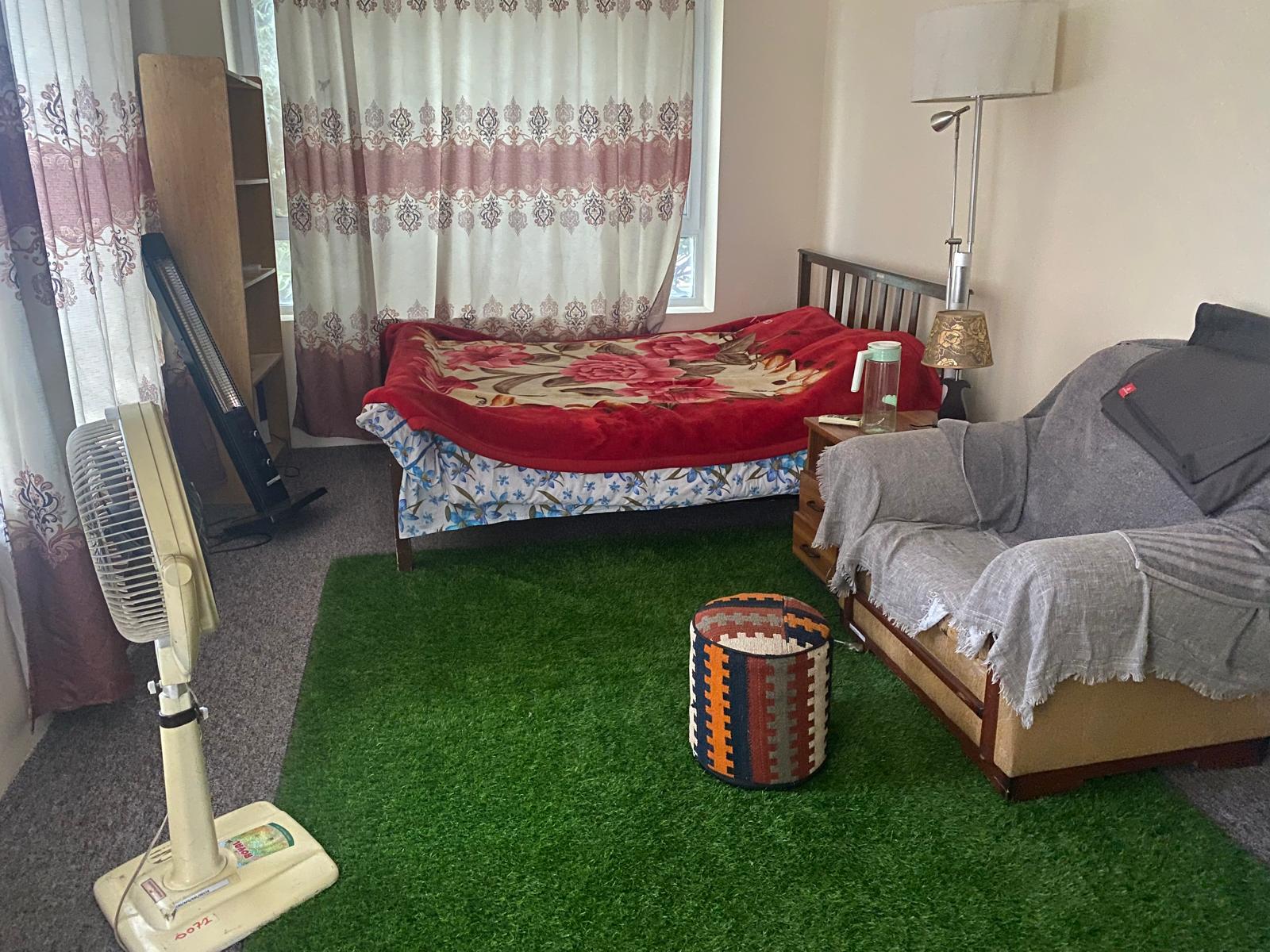
Why I Asked for AstroTurf in a Post-War Zone
August 17, 2026
I once asked the office staff in Afghanistan if I could carpet my entire bedroom in AstroTurf.
At the time, it seemed like a practical and budget-friendly choice. I was desperate to see something green. The humanitarian compounds where I worked were not exactly full of lawns, and I missed the feeling of grass under my feet. At that point, seeing and feeling almost any kind of grass was convincing enough.
Looking back, that request tells me a lot about who I was then.
I had become very good at adapting. I could move to a new country, figure out how an organization worked, read a room, build relationships across cultures, deal with difficult personalities, and find a way to make things happen.
People told me all the time that I always figured things out and I worried for nothing because somehow things ended up being okay.
I didn’t really believe them.
What I didn’t understand was that being able to handle almost anything had made it harder for me to admit when something wasn’t working.
If I could survive it, I assumed I could fix it. If I could fix it, I assumed I should stay.
That was my pattern for a very long time.
I spent years doing work I cared about in countries I wanted to experience. I was proud of it then, and I’m still proud of it. I worked with people I loved. I led programs that mattered to me.
I also got very used to being unsettled. A new contract, a new country, a new organization, a new group of people to understand. Each time, I found my footing.
The problem wasn’t that I lacked resilience. I had too much faith in it. I knew I could talk myself into almost anything if I could find a good enough reason to stay. I could tell myself that a difficult manager would get easier, or that I just needed to understand the culture better. That the next contract would feel different. That I needed to work harder or be more patient.
Sometimes that was true. Sometimes I should have left when I noticed how hard I was working to justify being there.
It cost me rest. It also cost me creativity. I got so used to responding to whatever was in front of me that I stopped asking what I actually liked.
When I left my last job in West Africa and moved to Istanbul, I finally had space to figure that out. I decided to take the sabbatical I had been talking about since the Covid years.
Naturally, I immediately filled the space. I enrolled in a Turkish course that took about twenty hours a week, plus another ten hours of homework. With the commute, I had recreated something close to a full-time job. I even became class president. My main responsibility was keeping track of who came late, but it still gave me a title.
In the afternoons, I went to the gym. I had never been someone who needed the gym before, but I needed somewhere to put my energy. Within six months, with the help of a world-class trainer (I was also the witness at her wedding!), I lost about thirty pounds and was reverse-squatting 180 kilograms. There was something very satisfying about moving weight I could control.
Eventually, I decided I needed to get serious about work again. I went back to something I had done years before in Japan: teaching English. I thought I’d do it for fun. Within a month, I was teaching almost full time.
And I loved it. That caught me off guard.
I liked the students. I liked figuring out why one person understood something immediately while another needed a completely different explanation. I started developing my own approach based on what I saw working with my students and what I felt was missing from my own experience studying languages.
Then I found Neurolanguage Coaching. It gave me permission to lean further into something I was already doing: working as a partner with my students rather than being the expert with all the answers.
I also noticed that students told me things. They talked about difficult managers, personal relationships, confidence, moving countries, work problems, and the fear of speaking when they knew exactly what they wanted to say.
I’ve always noticed small things in people: a change in their voice, their eye movements, the way they shift in a chair when a certain subject comes up. I see patterns quickly.
For years, I had used that ability as a leader to understand the people and systems around me so I could adapt and help others do the same.
Then I realized I could use the same ability differently. The qualities I had spent years using to survive systems were also the qualities I could use to help people find their way through change and to become better leaders themselves.
I finally pursued professional coaching accreditation, which had been a goal for ten years, so I could develop those skills further.
The work made sense to me because I recognized something familiar in many of the people I worked with.
Someone would tell me they lacked confidence, but I could see that they were confident in almost every setting except one or two. Someone else would describe a difficult situation at work and immediately assumed it was their fault. An English coaching client would tell me how terrible their English was after years of study while having a complex conversation with me entirely in English.
My instinct is to challenge that.
“How do you know that’s true?”
“What evidence do you have?”
“What if there’s another explanation?”
Sometimes the person is contributing to the problem. I’ll say that too, diplomatically.
But sometimes they are trying very hard to succeed in a situation that asks too much of them, and they’ve decided that their inability to make it work means something is wrong with them.
I understand that instinct. For a long time, I assumed my job was to become better at fitting into whatever situation I found myself in.
I don’t believe that anymore because you also have to learn to recognize what fits you.
That idea became part of why I called my business No Blueprint.
We’re taught to aim for certain versions of success very early. Get to X. Do it this way. Be more like this kind of person. But what if you don’t want X? What if you want X and Y? What if you want to get to the same place by a completely different route? What if the things you keep trying to make less strange about yourself are actually giving you useful information?
I don’t think clarity usually arrives because you sit down and think hard enough. Mine didn’t; it came from experiments.
I led large teams and realized that some of my favorite parts of the job were one-on-one conversations and developing and facilitating training. I started teaching and realized I could now customize curriculums in a way that empowered people.
I started coaching and discovered that I actually enjoy entering a session without knowing exactly where we’ll end up an hour later.
Other clues came from conversations, books, classes, or things I found myself thinking about long after I expected to forget them. The things that kept returning were usually worth paying attention to and that matters in my coaching too.
The moments I like most are when someone starts using the tools without me, they try something they normally wouldn’t or they answer a question from a different perspective. They get the courage to experiment, and sometimes the result feels almost like magic.
They do something because it feels right, pay attention to what happens, and decide what to try next. I’d much rather see that than hand someone a pre-meditated plan and ask them to follow it blindly.
A few months ago, I went to the Salt Library in Istanbul to write.
It is located in an old bank that has been turned into a library, café, restaurant and art space. Its shelves hold Susan Sontag, retrospectives of 1970s and 1980s New York art, philosophy, Ottoman trade history, and the kinds of books I would have happily disappeared into when I was younger.
Sitting there and writing for pleasure ever since I stopped being a journalist too many years ago to count. I finally did it and this blog post came from that afternoon.
I remembered the version of myself who used to sit in libraries for hours, reading and writing and imagining that someday I might live somewhere far away and write about the world.
And I thought about the AstroTurf. Back then, I didn’t ask myself what my hunger for grass was telling me. I just tried to make the room easier to live in.
My apartment in Istanbul now has a garden and guess what covers part of the walls? AstroTurf.
But this time there are also trees, white rocks, sunshine and plenty of empty space.
I keep thinking about what I want to plant there.
Flowers? A lemon tree? Possibly real grass? I’m still figuring it out, but I am choosing instead of adapting to it.
